

 Contact us
 Visit CPRE.org
 Donate
Grey belt land grab unnecessary: 1.5 million new homes ready to build
Our data shows that more than 1,138 hectares (2,813 acres) of green fields in the designated Green Belt countryside in Hertfordshire have already received permission or are currently proposed for development by being classified as ‘grey belt’. But this ‘grey belt’ land grab is completely unnecessary due to huge numbers of existing unbuilt consents, brownfield opportunities and long term empty homes.
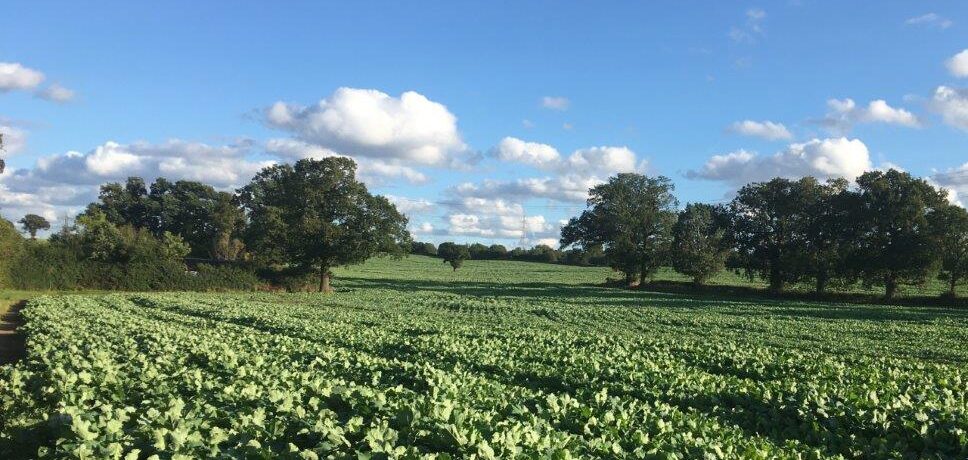
The ‘grey belt’ sites under threat in Hertfordshire are all green fields, mostly arable cropland and grazing land. These are not derelict petrol stations, disused car parks or any other form of previously developed land as repeatedly and erroneously claimed by the government.
At the same time, we know these ‘grey belt’ planning applications are unnecessary because across England there are enough existing unimplemented planning consents, identified brownfield land, and long term empty homes to achieve even more than the government’s 1.5 million new homes target. This could be done right now, without a single new planning application in the countryside. See the details below.
We urge everyone to join our ongoing campaign for the government to reverse its damaging ‘grey belt’ policy and restore pre-existing protections for the Green Belt. The definition of ‘grey belt’ in national planning policy is so expansive that nearly anywhere in the Green Belt could be deemed ‘grey belt’. And developers have lost no time in taking advantage of this. Please help by writing to your MP – you can share this webpage with your MP or customise and send our MP letter template.
Use our template to write to your MP
‘Grey belt’ applications in Hertfordshire
Since the government introduced its concept of ‘grey belt’ in 2024, we’ve responded to 65 planning applications covering 1,138 hectares of Green Belt countryside that have argued that the site is ‘grey belt’. These proposals comprise 10,000 dwellings, as well as 8 commercial solar farms, 2 data centres, 1 stand-alone battery energy storage system (BESS), and 1 other commercial development. And none of these are on brownfield or previously developed land, nor are they derelict petrol stations, disused car parks or abandoned garages.
Is this huge land-take needed for housing?
Despite the government’s rhetoric, this ‘grey belt’ land grab isn’t even needed to fix the housing crisis. There are more than enough existing unimplemented planning consents, already-identified brownfield land, and long term empty homes to achieve more than the government’s 1.5 million new homes target.
Unimplemented consents
The Institute for Public Policy Research (IPPR) – an independent charity – published research in February 2025 showing that developers have secured planning permission for more than 1.4 million homes since 2007 (and more than 1.1 million homes between 2010 and 2020) that have not been built. According to the IPPR, “common reasons for this include developers wanting to increase the land’s value before selling it on and land banking to slow building rates and maintain high house prices.” The think-tank goes on to recommend that “government considers measures to force developers to build, or face sanctions.”
Brownfield
Here at CPRE, our own research shows there is enough identified brownfield (previously developed) land across England for 1.41 million new homes. What’s more, 770,000 of these already have planning permission.
We know that right here in Hertfordshire, the ten district Councils’ own brownfield land registers show there is enough space for 26,799 new homes, and that 11,339 of these already have planning permission.
Long term empty homes
The charity Action On Empty Homes tabulates government data on housing vacancies. They report that there are 303,143 long term empty homes in England. These are homes that are empty for six months or more. When Council tax-exempted empty homes, those that are not yet ‘long term’ empties, and second homes are all added in, Action on Empty Homes finds that there were 1,022,433 vacant homes in England in 2025.
We note that there are 5,057 long term empty homes right here in Hertfordshire. As with everywhere across the country, it’s crucial that these homes are quickly brought back into occupancy.
What are the totals, how many new homes could be built now?
Adding together these three figures – the number of new homes that have planning permission but have not been built, the number of homes on identified brownfield but do not yet have planning permission, and the number of long term empty homes – we find that the government could easily achieve more than its target of 1.5 million new homes, without having to grab any Green Belt under the guise of ‘grey belt’.
| * | England | Hertfordshire |
|---|---|---|
| Unimplemented consents | 1,100,000+ | Unknown, but 11,339 on brownfield |
| Brownfield, but not yet consented | 640,000 | 15,460 |
| Long term empty homes | 300,000 | 5,057 |
| Total | 2,040,000+ | 31,856+ |
What is the solution?
We are calling on the government to:
- reverse its damaging ‘grey belt’ policy and restore pre-existing protections for the Green Belt;
- change national planning policy so that once planning consent has been granted, it must be built within a reasonable timeframe or else sanctions should be applied;
- implement a “brownfield first” policy with real teeth in it, so these redevelopment and regeneration opportunities are not continually deferred and left unbuilt; and
- bring long term empty homes back into occupancy as soon as possible, so these dwellings can be utilised and are not just a waste of space.
We want to see all of these measures in place before eroding and diminishing the Green Belt, as is currently happening.
The Green Belt is one of England’s outstanding achievements
Campaigners in the late 19th and early 20th centuries called for a “green belt” around large population centres to prevent the loss of countryside to urban sprawl. This was achieved in 1938 with the passage of the Metropolitan Green Belt Act, one of CPRE’s early successes.
The Green Belt is the countryside next door for millions of people all across England, providing access to nature and wildlife, clean air, tranquillity, and space for recreation. The Green Belt – and green spaces more generally – are essential for our health and well-being, and for helping to mitigate climate change and the loss of biodiversity and threatened species. And there is near universal support for protecting the countryside, with 86% of Britons in support of the Green Belt according to a recent poll by More in Common.
Now, with the government’s current ‘grey belt’ policy we are all seated in the front row watching a slow-motion tragedy unfold, as ever more Green Belt land is being lost to development. In a few years’ time, it is possible that London and its conurbation will have engulfed the home counties, and those of us who live in towns and villages will find that we are instead residing in the middle of endless development sprawl.
Take action
Please join us in our campaign to get the government to reverse its damaging ‘grey belt’ policy. Share this article with your MP and your local Councillor and tell them how upset you are about the government’s current approach. Or customise our template MP letter for your own use.