

 Contact us
 Visit CPRE.org
 Donate
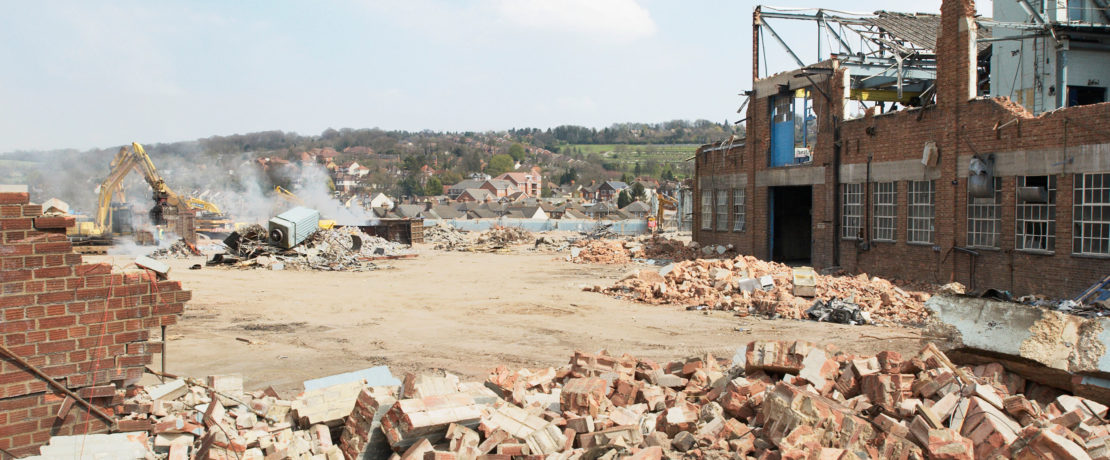
CPRE research shows there is space for 1.41m new homes on brownfield land
With space for 1.41 million new homes, of which 770,000 have already received planning permission, the government could rapidly deliver the majority of its housing target of 1.5 million homes without having to build in the Green Belt or on greenfield land in the wider countryside.
Our new research shows that there is even more shovel-ready brownfield land than before. Local Councils across England have identified 30,000 hectares of brownfield sites, capable of delivering a minimum of 1.41 million new homes, up from 1.21 million previously. These figures are based on each local Council’s publicly available Brownfield Land Register.
What’s more, over half of these identified sites have already received planning permission for more than 770,000 new homes.
Read our new brownfield report
In addition, brownfield land is a constantly renewing resource. More sites are coming forward all the time as more land within town centres becomes available for redevelopment and commercial sites are redesigned as mixed-use commercial plus residential.
Government could meet housing target without building in the countryside
Obviously these figures are hugely significant in the context of the government’s ambition to build 1.5 million new homes. Our analysis shows the government could achieve this without having to build in the Green Belt and the wider countryside.
This huge supply of brownfield land should be the first choice for building new homes. These sites are typically located near existing infrastructure such as public transport, schools and healthcare facilities, making them ideal for development. And with planning permission already in place for more than 770,000 houses, these new homes could be delivered rapidly.
But despite government policy prioritising brownfield development, this just isn’t happening fast enough and we continue to see developer proposals for mass-development on greenfield sites in the countryside. Building on greenfield land, rather than repurposing brownfield sites, contributes to the degradation of our already nature-depleted landscapes and threatens the ecosystems that play a crucial role in combating climate change.
What about brownfield here in Hertfordshire?
Every year we compile the latest brownfield data for Hertfordshire’s ten districts and boroughs, using each Council’s own Brownfield Land Register. Each year the figure has varied, but consistently year after year the data shows that there is enough space for at least 20,000 – 30,000 new homes on identified brownfield land across Hertfordshire. While this may not meet all of Hertfordshire’s housing need, if these homes were built it would significantly reduce the need to build in the Green Belt and on greenfield land in the wider countryside.
The most recent data is available here on our website.
Brownfield, the Green Belt, and grey belt
We want to see the government and local authorities enforce a ‘brownfield first’ development approach, so these brownfield sites can be delivered as soon as possible.
And time is of the essence. We are seeing a tsunami of developer applications to build on greenfield sites and valued landscapes within the Green Belt in Hertfordshire, arguing that the land is ‘grey belt’. The government has described its new designation of ‘grey belt’ as derelict petrol stations, disused car parks and abandoned garages. But their actual definition of ‘grey belt’ in national planning policy (revised December 2024) is so expansive that it could encompass virtually all of the Green Belt anywhere.
Since the term ‘grey belt’ was introduced about a year ago, we’ve seen dozens of planning applications for speculative development in the Green Belt in our county that argue ‘grey belt’. At the time of writing, if approved these would cover over 835 hectares (more than 2,000 acres) of land in order to build 8,554 dwellings, 5 solar farms and 2 data centres.
We are calling on the government to amend their definition of ‘grey belt’ and restore the pre-existing protections for the Green Belt. Read more about our campaign, and help save the Green Belt by signing our petition here.