

 Contact us
 Visit CPRE.org
 Donate
Branches against the wind: how hedges protect nature
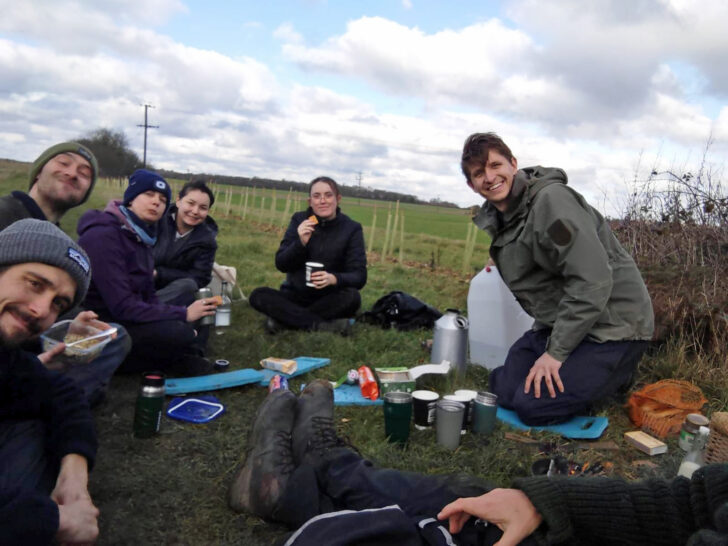
January’s test: hedges holding strong. Our Hedgerow Heroes Project Officer, James Lunt, and our volunteers are making great progress.
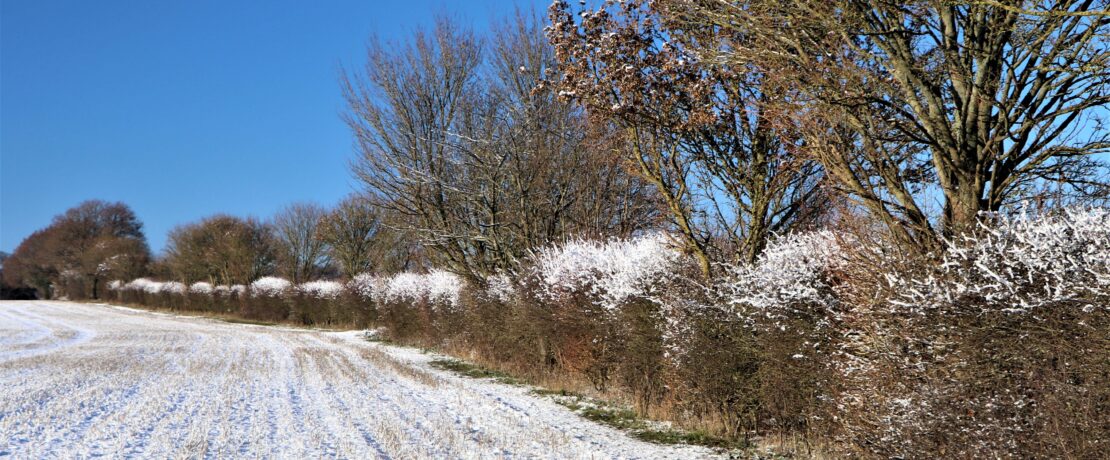
January has been a good test for our planting, and it’s a testament to our volunteers that many of the whips we planted in November and December at Woodhall Estate in East Hertfordshire are still standing. The wind and rain have done their best to undo our hard work, but our hedgerow has got off to a great start. Within a few years I’m sure the fieldfares, hedgehogs, overwintering butterflies and all the other species that live in our wintery landscape will thank us for the shelter.
Shelter for wildlife and livestock
Hedges don’t just offer respite from the cold to those who stand within their branches. There is evidence that they warm whole fields by acting as shelterbelts, reducing windchill across area of ground nearby, which can often be a few degrees warmer than the other side of hedge. This is a lifeline not just for overwintering livestock that shelter behind it, but also the wildlife that use them to crisscross the otherwise wind battered landscape. Cattle and sheep in more hedged landscapes typically have less stress, and therefore less energy use over winter than those in more open ones, and so the farmer will have happier, and healthier animals in the long run.
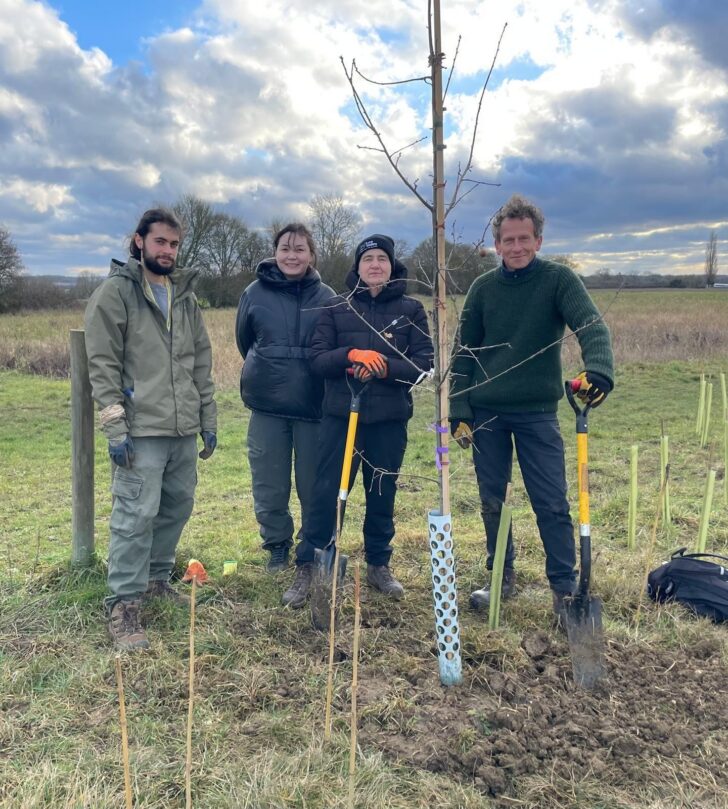
We’re using a mixture of species in our hedges, including the evergreen yew, holly, and barberry, which will offer even more shelter than just planting deciduous species that lose their leaves in winter.
Nature’s drainage system: hedges and water management
You may also notice on your winter walks (if you have good wellies!) that the ground around hedgerows is often a lot less waterlogged than the footpath, or in a field. This is because of the rough texture of twigs and leaves on the hedge bottom, as well as the thick stems that intercept rainfall. The porous nature of hedgerow soil, which is pockmarked by complex root systems and earthworm activity, means that water drains more easily into the land, through the channels to infiltrate down to aquifers, or into groundwater. The fact that hedge plants are also transpiring, that is pulling water from their roots up the stems and out the leaves, means that this ground dries up much more quickly than a field, where grass has much smaller roots. More interception and infiltration mean water is getting into river channels more slowly, reducing flooding downstream by holding it upstream.
Building climate-resilient landscapes
Hedges are therefore an essential tool in making our landscapes more resilient in the face of increased rainfall due to climate change. In Wales, the careful placement of tree strips, analogous to hedgerows, reduced the size of flood peaks by 40%. By restoring the hedgerow network in Hertfordshire, we can help safeguard the towns downstream, relieving the pressure on their hard flood defense infrastructure. This work fits in well with some of the other habitat restoration projects at Woodhall Estate, where “re-wiggling” of the river Beane in the park will also serve to slow down the flow and store more water in the floodplain.
To see these benefits, we need to get hedges planted now, so our landscapes are resilient in the future. If you want to get stuck in to create the countryside of tomorrow, then join me and our group of passionate and friendly volunteers on the 15th and 22nd of February, near Stevenage. Our goal is to get 2100m of new hedgerow established by March, and with just under half of this done already, now is a great time to get involved to help us reach, or even exceed, this target. To sign up, email volunteering@cpreherts.org.uk