

 Contact us
 Visit CPRE.org
 Donate
Hertfordshire’s Hedgerow Heroes: A cracking start to the season
Our Hedgerow Heroes Project Officer – James Lunt – provides an update.
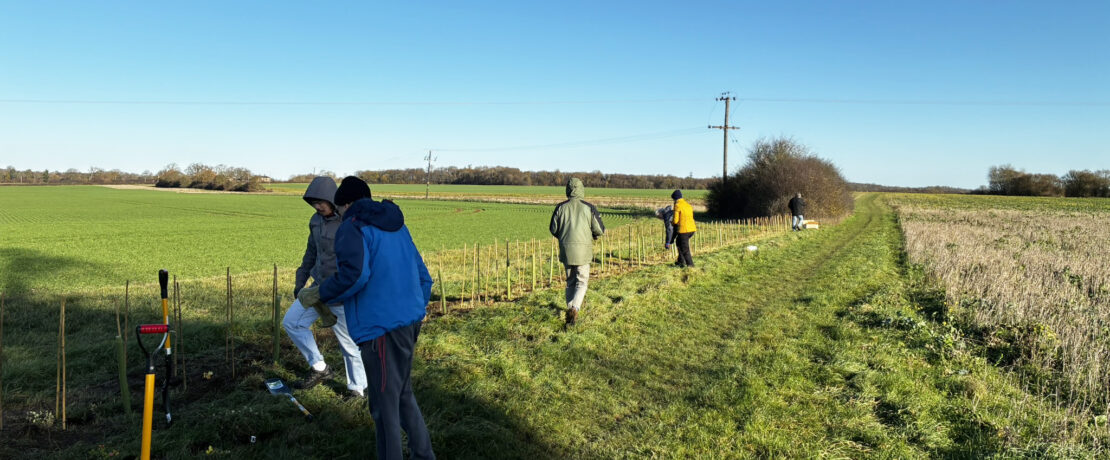
With most of the leaves fallen and the hedges bare, winter is very much here – though the unseasonably warm weather reminds us that all is not right with our planet’s natural rhythms. It is a strange experience planting in December, while skylarks sing in blue skies above, and bumblebees crash against my coat. Reminders like this add even more urgency to our work: each metre of hedge planted is another cog re-added to the complex system that maintains life on Earth.
Progress
With three days of planting so far, and 500 metres more hedges in the Hertfordshire countryside, we are doing our bit.
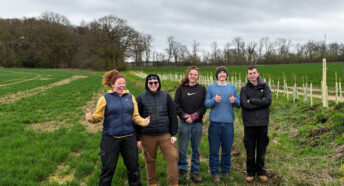
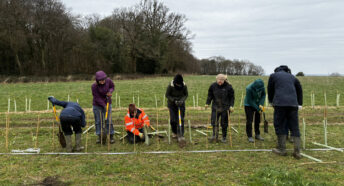
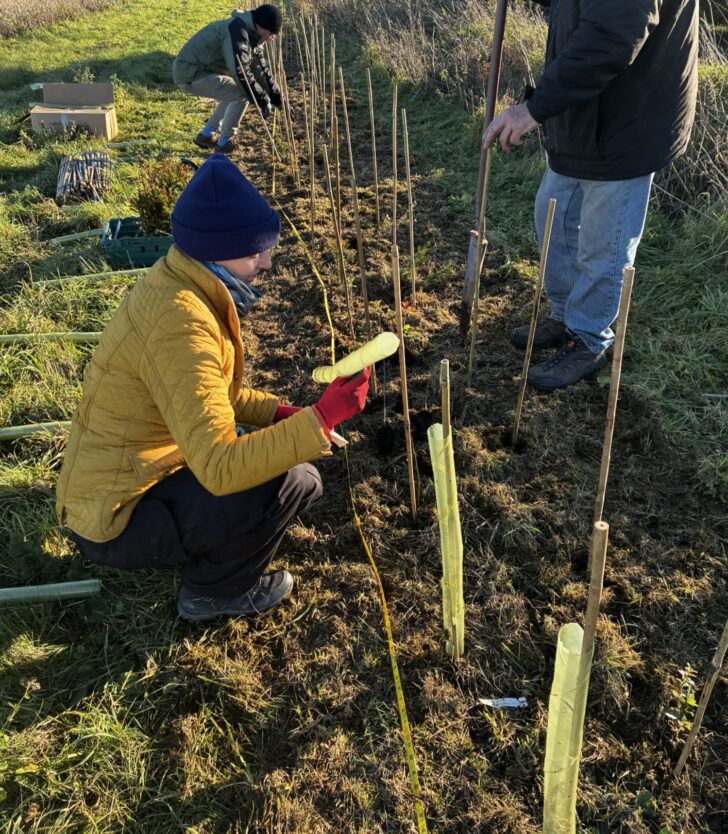
I have been joined by some brilliant people who care about nature and want to help steward our impoverished landscapes. With shovels in hand, and with plenty of tea and mince pies, they have carefully marked out hedge lines, planted small saplings (known as whips), placed guards around them to protect against deer, and finally laid down woodchip to reduce the growth of plants that may outcompete them. While we won’t be having any more mince pies, there will be plenty more opportunity to volunteer with hedges in 2026, and do your bit for nature.
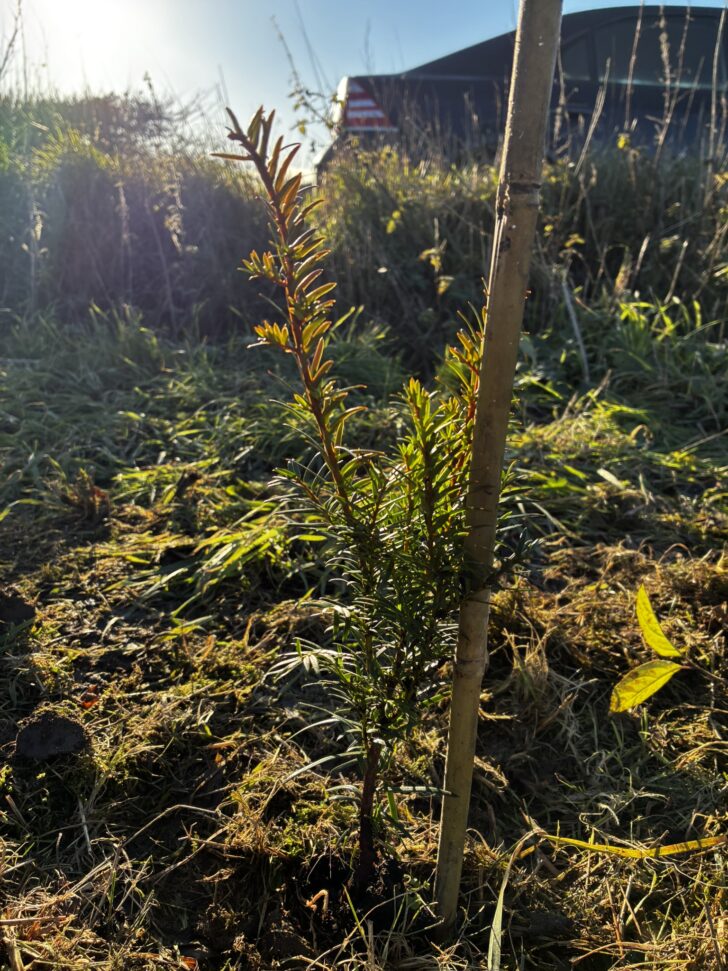
We have planted a diversity of species in these hedges rather than just the usual hawthorn, though this is also included. There is yew as well as English elm, barberry and spindle; in all, these hedges will have a mix of fifteen different species. The reason we have included so many is because we are working with Butterfly Conservation to ensure that we are supporting the threatened moth and butterfly species of Hertfordshire. Their unique ecology means that often their caterpillars will only feed on one species, such as the White Letter hairstreak on elms. Having a diverse mix of plants will mean a diverse mix of butterflies clouding the hedge in late summer.
The future of the Hedge
Above ground, many of these plants won’t produce enough leaves or pollen to immediately help our threatened butterflies and other invertebrates. Below the soil, however, earthworms will already have started increasing, the soil kept warm and moist by the woodchip above. Within a few months, the plants’ roots will have already formed connections with the web of Mycorrhizal fungi underground, and more nodes will be added to the network that spreads below the soil. Bats may already be using the linear features to navigate, and birds and hedgehogs will be travelling between the canes and guards that act as a corridor through previously wide-open fields.
In a few years’ time the hedges’ structure will be complex enough for birds to build their nests, and soil carbon will begin to build back up. Eventually the hedge will be the lynchpin of a complex network of hundreds of different species, above and below ground.
The impact these habitats have on the landscape is enormous, and our volunteers can feel immensely proud of the part they have played in nature’s recovery. I know many will re-join me when we host more planting days in the new year, and I hope to see you there too!
Dates for January/February are going to be released in the first week of the new year. To sign up for the mailing list please get in touch at volunteering@cpreherts.org.uk