

 Contact us
 Visit CPRE.org
 Donate
Over 1.5 billion sq ft of industrial rooftops available for solar in UK
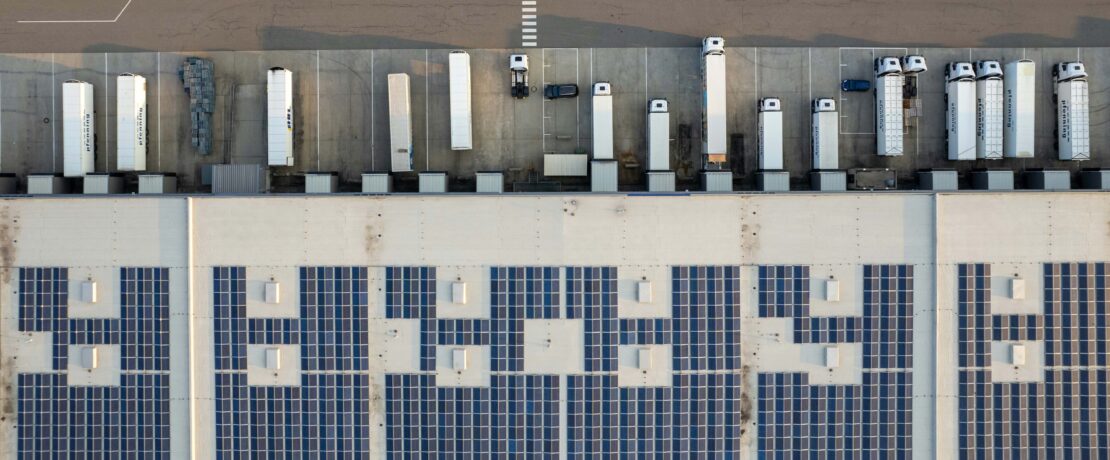
A new report shows that the UK logistics sector has over 1.5 billion square feet of available and usable roof space, capable of generating more than 35 GWh (Gigawatt-hours) annually through solar photovoltaic panels and contributing circa £3 billion to the UK economy.
We’re pleased to see a recently published report from Cushman & Wakefield, the global real estate services firm, that shows there is vast untapped potential for solar energy generation on logistics and industrial rooftops in the UK.
Key findings
The firm surveyed over 60 senior stakeholders across a broad mix of occupiers, landlords, developers and property consultants operating in the UK’s logistics and industrial property sector. The survey responses showed that:
- Over 1.5 billion square feet of rooftop space on logistics and industrial buildings is available for solar power generation;
- If deployed, this would generate more than 35 GWh annually and contribute circa £3 billion to the UK economy;
- In the years 2020 – 2024, an additional 160 million square feet of new industrial space was delivered to the market;
- A majority of survey respondents have begun installing solar panels on some of their buildings – this is a positive step – but unfortunately solar is currently installed or pending on less than 50% of their property portfolio.
This new report reinforces the figure published by Solar Energy UK – the solar industry trade association – about three years ago. That organisation estimated that 250,000 hectares (617,000 acres) of suitable, south-facing commercial rooftops are available for solar energy generation – larger than the area of London and Manchester combined, and capable of producing up to 50 GW.
Other sources including the UK Warehousing Association also estimate the huge potential opportunity offered by retrofitting solar panels onto existing commercial roofspace. All of this is in the context of the UK government’s target of having 70 GW of installed solar capacity by 2035, with the government’s Solar Taskforce specifically highlighting the potential of commercial rooftop solar.
Government needs to extend its plans to include commercial rooftops
This is why here at CPRE, we are calling on the government to extend their plans for requiring solar panels on new residential dwellings to also apply to commercial buildings. And the government’s plans need to go further to include support for the retrofitting of solar panels on the vast amount of existing, available commercial rooftop space.
Instead, solar promoters are targeting prime farmland
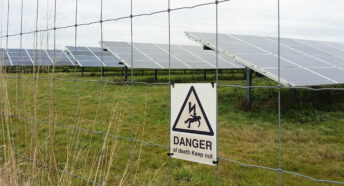
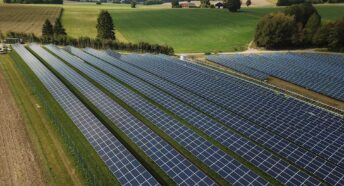
By contrast, meeting national energy targets through ground-mounted solar installations would require an enormous amount of land in the countryside – land that is needed for growing food, and for supporting nature and our own health and well-being. But these considerations are not stopping solar developers who continue to target prime agricultural land for solar energy. We continue to campaign against land-hungry mega solar farms.
At the time of writing, there are currently 20 installed or proposed solar farms in Hertfordshire that would destroy highly-valued rural landscapes and take more than 1,000 hectares (c. 2,500 acres) of productive farmland out of food production.
Join our campaign for a rooftop revolution
We’re all for solar energy on rooftops, but not for industrialising the rural landscape with glass and steel, transformers and batteries. We are campaigning for a rooftop revolution to dramatically increase the pace and scale of rooftop solar energy generation. Become a member of CPRE Hertfordshire and help protect the environment and the countryside for everyone to value and enjoy. It’s easy and quick to join online.